Contents
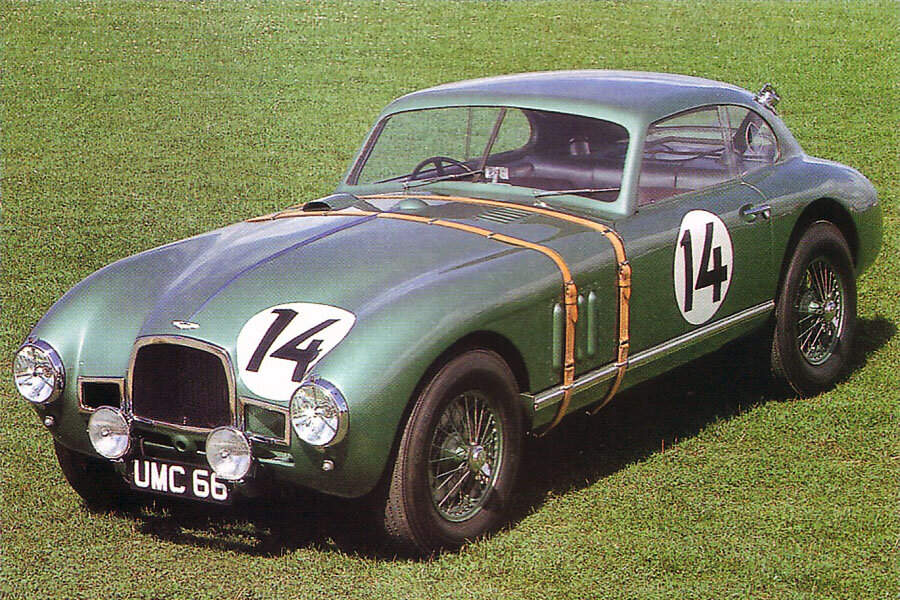
The Story of Chassis LML/50/7
Chassis LML/50/7 was one of just three factory-built DB2 team cars completed in 1950, marking an important chapter in Aston Martin’s early post-war racing history.
Registered VMF 63 in May 1950, it formed part of a striking trio finished in Cadillac Green, alongside its consecutively registered siblings VMF 64 and VMF 65.
Le Mans Debut
The car’s first competitive outing came at the Le Mans 24 Hours on June 24–25, 1950. For this demanding event, the works DB2s received a range of race-specific upgrades, including long-range fuel tanks with roof-mounted fillers, additional cooling ducts, bonnet cut-outs for rapid fluid top-ups, illuminated identification plates, and leather bonnet straps.
Driven by Reg Parnell and Charles Brackenbury, LML/50/7 lined up 21st on the grid—positions having been assigned by engine capacity rather than practice times. Running at an average speed of 85.25 mph, the pair finished an impressive sixth overall and second in the under-three-litre sports car class. One place ahead was the class-winning DB2 driven by George Abecassis and Lance Macklin.
Continued Competition in 1950
The trio of works cars returned to action at the Silverstone International One Hour Production Car Race on August 26. By then, the Le Mans modifications had been removed, and the cars appeared close to standard specification. Parnell drove chassis 7 to sixth overall and third in class, while the best-performing Aston Martin finished fourth.
Parnell again piloted LML/50/7 at the Dundrod Tourist Trophy on September 16. Run over three hours in extremely poor weather, the race highlighted the DB2’s excellent roadholding. Chassis 7 finished fourth overall, securing another class victory to follow Aston Martin’s success at Le Mans.
Just a week later, all three team cars appeared at the Shelsley Walsh Hillclimb on September 23. In its final competitive appearance, Parnell was the fastest Aston driver but finished fourth in the three-litre production class, with the lightweight works Frazer Nashes proving untouchable.
Development and Later Life
Following its racing season, LML/50/7 was road-tested for the September 27 edition of The Motor magazine. The car was then retained by Aston Martin Ltd. for development duties.
During 1951, it was upgraded with a Series 2 bonnet. Prior to being sold in 1953 to AGF Oldworth, the DB2 received a replacement engine. Oldworth retained the car into the early 1960s, occasionally campaigning it in club-level motorsport events.
Notable Details
-
Chassis: LML/50/7
-
Model: Aston Martin DB2 Series 1
-
Color: Cadillac Green
-
Factory: Aston Martin Ltd.
A genuine works DB2 with period competition history, LML/50/7 stands as a rare survivor from Aston Martin’s formative years in international endurance racing.