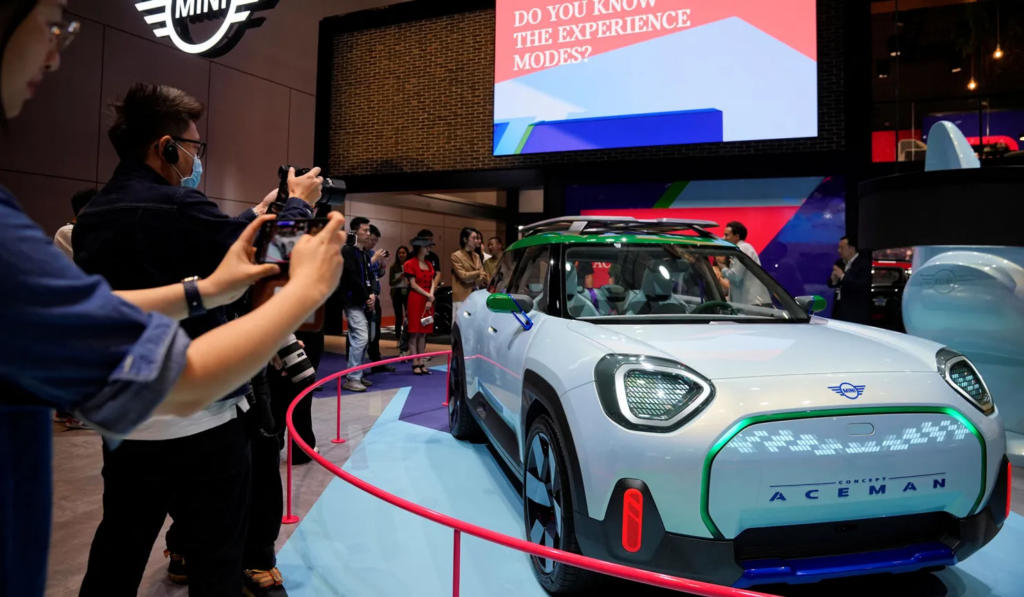
The 2027 Shanghai Auto Show is shaping up to be more than a traditional automobile exhibition, with organizers planning to bring artificial intelligence, robotics, advanced chips and other emerging technologies closer to the center of the automotive industry. The 22nd Shanghai International Automobile Industry Exhibition is scheduled to take place from April 23 to May 2, 2027, at the National Exhibition and Convention Center (Shanghai).
One of the most notable additions will be a dedicated embodied AI exhibition zone, reflecting the growing convergence between intelligent vehicles, robotics and physical artificial intelligence.
Contents
Shanghai Auto Show to Expand Its Technology Focus
Organizers expect the 2027 edition to cover around 400,000 square meters, making it one of the largest editions in the event’s history. The 2025 Shanghai Auto Show covered more than 360,000 square meters and attracted about 1,000 companies from 26 countries and regions, demonstrating the event’s importance to the global automotive industry.
The expansion in 2027 will not simply mean more vehicles on display. The organizers intend to broaden the exhibition’s scope toward smart hardware and emerging technologies. Under the announced theme “Build the Ecosystem Together, Lead the Future with Intelligence,” the show will focus on new intelligent technology tracks, innovative applications and evolving industrial ecosystems.
This approach reflects how quickly the definition of an automobile is changing. Modern vehicles increasingly combine electric powertrains, advanced sensors, computing platforms, connectivity and AI-based software. The next stage could see these systems interacting more closely with robots and other intelligent machines.
Dedicated Embodied AI Zone
The planned embodied AI zone is arguably the most distinctive feature of the 2027 event. Organizers say the area will showcase applications involving physical AI and high-end chips, creating real-world demonstration and testing scenarios for emerging technologies.
Embodied AI refers broadly to artificial intelligence that operates through a physical body and interacts with the real world. Unlike software-based AI that primarily processes information on a screen, embodied AI can perceive its surroundings, make decisions and take physical actions through robots, machines or other devices.
For the automotive sector, this technology could have significant implications. Cars are already becoming increasingly capable of sensing roads, understanding environments and making decisions. The same technologies can also support humanoid robots, autonomous industrial machines and intelligent manufacturing systems.
The new exhibition zone could therefore provide a platform where automakers, technology companies, chip manufacturers and robotics developers demonstrate how these technologies can work together.
From Smart Cars to Intelligent Machines
The decision to introduce embodied AI at a major automobile show highlights the industry’s expanding technological boundaries.
Automakers are no longer competing solely on engine performance, vehicle design or battery range. Software, computing power, autonomous driving capabilities and AI are becoming important elements of vehicle development.
High-end automotive chips will be another important part of this transformation. Advanced processors are required to handle large volumes of data from cameras, radar, lidar and other sensors while simultaneously running increasingly sophisticated AI models.
The Shanghai exhibition plans to create application scenarios around physical AI and advanced chips, potentially allowing visitors to see how these technologies move from laboratory concepts into practical products.
A Major Platform for China’s Automotive Industry
Shanghai Auto Show has long been an important meeting point for Chinese and international automakers. The 2025 edition displayed 1,366 vehicles, including 163 world premieres, while attracting more than one million visitors.
The 2027 edition is expected to continue that role while placing greater emphasis on intelligent technology. The event is also intended to help international companies expand in China and Chinese companies develop overseas markets, giving the show significance beyond product launches.
The wider ecosystem around embodied intelligence is also developing rapidly in Shanghai. A separate Shanghai International Embodied Intelligence Expo is planned for the same April 23–May 2 period at the National Exhibition and Convention Center, indicating the city’s growing ambition to establish itself as a major hub for this technology.
Shanghai and Beijing Maintain Their Alternating Roles
The announcement also helps clarify the future relationship between China’s two major international auto shows.
Shanghai and Beijing have traditionally alternated comprehensive automobile exhibitions, with Shanghai taking the odd-numbered years and Beijing hosting the even-numbered editions. For 2027, Beijing will hold a specialized exhibition in March, while Shanghai will host the next major comprehensive auto show in April.
This arrangement is intended to avoid unnecessary overlap and give the two events more clearly defined roles within China’s automotive exhibition calendar.
What Visitors Can Expect in 2027
The 2027 Shanghai Auto Show is expected to combine traditional vehicle premieres with demonstrations of software, AI, robotics, chips and smart hardware. Media days are scheduled for April 23–24, followed by professional visitor days and public days extending through May 2.
For automakers, the event will offer an opportunity to unveil new models and technologies. For technology companies, it provides access to one of the world’s largest automotive ecosystems. And for visitors, the show could offer an early look at how cars, robots and AI-powered machines may increasingly become part of the same technological ecosystem.
A Glimpse Into the Future of Mobility
The 2027 Shanghai Auto Show could ultimately be remembered for demonstrating how far the automobile industry has moved beyond the traditional concept of a car. The planned embodied AI zone signals that future mobility will involve not only electric vehicles and autonomous driving, but also intelligent machines capable of interacting with the physical world.
With a projected exhibition area of around 400,000 square meters and a strong focus on AI, chips, robotics and smart hardware, the April 23–May 2 event is positioned to become a major showcase of the next phase of automotive innovation.
If the automotive industry is moving from “manufacturing” toward “intelligent manufacturing,” as organizers suggest, Shanghai in April 2027 could provide one of the clearest demonstrations yet of what that transition looks like.