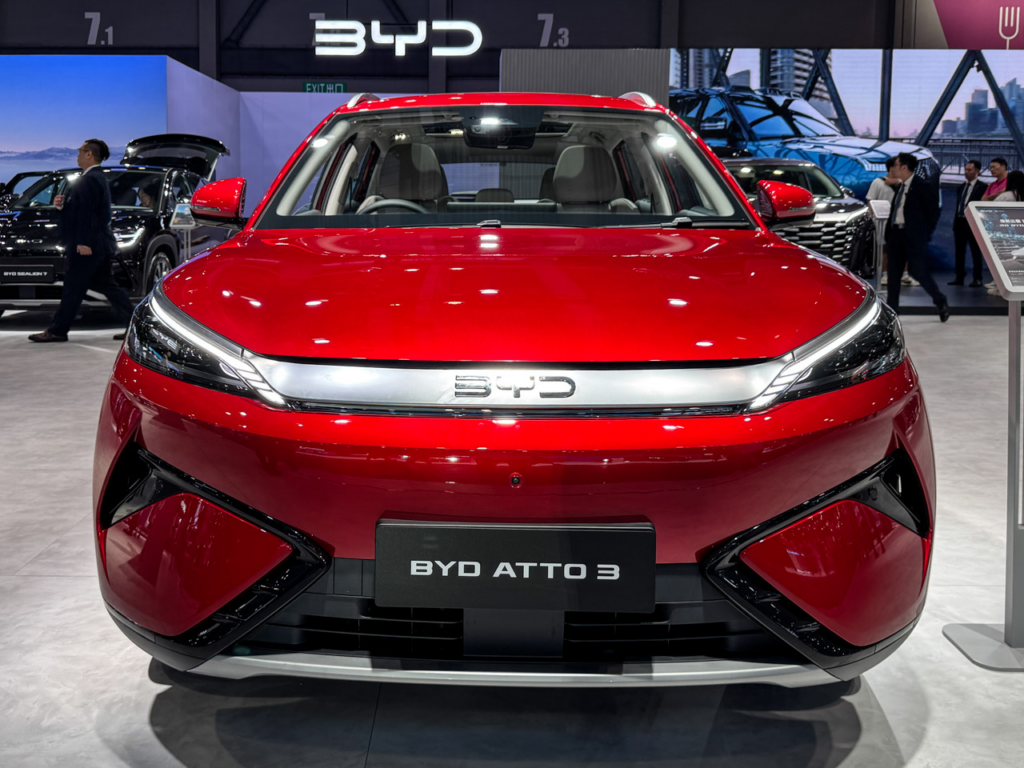
The 2026 BYD Atto 3 Evo represents a significant step forward for BYD’s electric SUV lineup. With improvements to its battery technology, charging capabilities, performance, practicality and interior design, the updated model aims to compete more effectively in the increasingly competitive electric vehicle market. It builds on the strengths of the original Atto 3 while addressing several areas where newer electric SUVs have raised expectations.
The Atto 3 Evo introduces an upgraded 74.8kWh Blade Battery, an advanced 800-volt electrical architecture and a revised rear-wheel-drive platform. An all-wheel-drive version is also available in selected markets, offering substantially more power and faster acceleration.
Important clarification: The Atto 3 Evo’s official trim names vary by market. The UK version uses Design and Excellence, while India has its own Atto 3 variant lineup. This review focuses on the 2026 Atto 3 Evo’s overall specifications and driving experience rather than assuming that a specific Premium trim is available in every country.
Exterior Design: A Sharper and More Modern Appearance
The 2026 BYD Atto 3 Evo receives exterior styling updates that give it a cleaner and more contemporary appearance. Although its overall silhouette remains familiar, revised design elements help the electric SUV look more aligned with BYD’s newer models.
The front end features a more streamlined appearance, while the updated lighting elements contribute to a modern road presence. The sculpted bodywork and balanced proportions retain the practical character expected from a family-oriented electric SUV.
Rather than introducing an entirely different design, BYD has refined the existing formula. The result is an electric crossover that looks more mature without abandoning the distinctive identity of the original Atto 3.
For buyers who prefer understated styling over an aggressively futuristic appearance, the updated design should be appealing.
Interior and Comfort: Technology Meets Practicality
Inside, the Atto 3 Evo combines a technology-focused dashboard with a more conventional layout. The cabin retains its digital-first approach but benefits from updated software, revised controls and improved practicality.
One of the main highlights is the 15.6-inch infotainment touchscreen, accompanied by an 8.8-inch digital instrument cluster. The large central display provides access to navigation, entertainment and vehicle settings, while the driver’s display presents essential driving information.
The gear selector has also moved to a steering-column-mounted stalk, freeing up space around the centre console. This change contributes to a cleaner cabin layout and makes room for additional storage possibilities.
Passenger comfort remains an important part of the Atto 3 Evo’s appeal. Its five-seat configuration makes it suitable for families, daily commuting and longer journeys. The cabin offers useful storage areas, while the expanded luggage capacity improves its suitability for everyday activities.
However, buyers should remember that touchscreen-heavy controls may require some familiarisation. The actual equipment and upholstery available will also depend on the market and trim level.
Performance: A Major Upgrade Under the Skin
Performance is one of the most significant areas of improvement for the 2026 BYD Atto 3 Evo. Unlike a conventional facelift that primarily changes styling and equipment, the Evo introduces substantial mechanical and electrical upgrades.
The rear-wheel-drive version features a single electric motor producing approximately 313hp and 380Nm of torque. BYD claims that this configuration can accelerate from 0 to 100km/h in around 5.5 seconds.
For drivers seeking more performance, the all-wheel-drive version adds a second electric motor. Its combined output reaches approximately 449hp and 560Nm, allowing the SUV to accelerate from 0 to 100km/h in a claimed 3.9 seconds.
These figures place the Atto 3 Evo firmly in the performance-oriented electric SUV category. Instant electric torque should provide responsive acceleration during overtaking and highway driving.
The move to rear-wheel drive also changes the vehicle’s fundamental driving character compared with the front-wheel-drive original. Nevertheless, outright power does not automatically guarantee a comfortable or engaging driving experience. Independent reviews have highlighted concerns about suspension composure on uneven roads and steering weight, suggesting that buyers should take a test drive before making a decision.
Battery and Driving Range: Better Long-Distance Potential
Battery capacity is another major improvement in the 2026 BYD Atto 3 Evo. The SUV uses a 74.8kWh Blade Battery, replacing the smaller battery offered in the previous generation.
The rear-wheel-drive version offers a claimed WLTP range of up to 510km, while the more powerful all-wheel-drive version delivers up to approximately 470km on a single charge. Actual driving range will vary depending on road conditions, temperature, driving style, vehicle load and air-conditioning use.
The larger battery makes the Atto 3 Evo more suitable for longer journeys, reducing the need for frequent charging stops compared with the previous model.
BYD’s Blade Battery technology is based on lithium iron phosphate (LFP) chemistry. This battery type is known for its durability and thermal stability, making it an important part of the company’s electric vehicle strategy.
For urban commuters, the battery should provide considerable flexibility between charging sessions. Highway drivers, meanwhile, will benefit from the additional capacity when planning longer journeys.
However, the claimed WLTP range should not be confused with the distance achievable under all real-world conditions. Buyers should consider their typical driving requirements when evaluating the SUV’s range.
Charging Technology: Faster and More Convenient
The introduction of an 800V electrical architecture is one of the most important technological upgrades in the Atto 3 Evo.
The vehicle supports DC fast charging at up to 220kW under suitable conditions. According to BYD’s published specifications, charging the battery from 10% to 80% can take approximately 25 minutes when connected to a sufficiently powerful compatible charger.
This is a notable improvement for drivers who frequently travel long distances. Shorter charging stops can make electric vehicle ownership more convenient, particularly on highways with access to high-power charging infrastructure.
For home charging, the vehicle supports AC charging at up to 11kW. The manufacturer quotes approximately eight hours for a full charge using a suitable three-phase 11kW supply.
Charging speeds will depend on the charger, battery temperature, battery state of charge and other operating conditions. In areas where high-powered charging stations are limited, drivers may not always experience the maximum advertised charging rate.
The Evo also supports vehicle-to-load (V2L) functionality, allowing the battery to supply power to compatible external electrical equipment. This feature can be useful when camping or operating small electrical devices away from conventional power outlets.
Boot Space and Everyday Practicality
Practicality is an important consideration for buyers shopping for an electric family SUV, and the Atto 3 Evo makes meaningful improvements in this area.
The updated model provides approximately 490 litres of rear boot capacity, increasing to around 1,360 litres with the rear seats folded. These figures make it suitable for shopping, holiday luggage and other everyday storage requirements.
Another useful addition is a 101-litre front storage compartment, commonly called a frunk. It provides extra room for smaller items and helps owners organise their luggage more efficiently.
The five-seat cabin also makes the vehicle a practical option for families. However, prospective buyers should check rear-seat comfort, child-seat compatibility and luggage arrangements in person, particularly if the SUV will regularly carry five occupants.
Overall, the revised packaging improves the Atto 3 Evo’s versatility for both everyday commuting and longer family trips.
Safety and Driver Assistance Features
Modern electric SUVs are expected to offer a comprehensive collection of safety technologies, and the Atto 3 Evo is designed to meet those expectations.
Depending on the market and trim level, the equipment may include automatic emergency braking, adaptive cruise control, lane-keeping assistance, traffic-sign recognition, driver-attention monitoring and parking assistance systems.
These technologies can help reduce driver workload and improve awareness of potential hazards. Parking cameras and sensors are particularly useful in urban environments, where tight parking spaces and heavy traffic can make manoeuvring more difficult.
Nevertheless, buyers should verify the precise safety equipment offered on their chosen variant. Features that are standard on one version may be optional or unavailable on another.
The revised 2026 model should also be distinguished from the earlier Atto 3 when reviewing independent crash-test results. A previous model’s safety rating should not automatically be treated as confirmation of an identical rating for the updated vehicle.
Ride Quality and Driving Experience
Despite its substantial performance improvements, the Atto 3 Evo is not necessarily designed to be a sports SUV.
Its electric powertrain provides smooth acceleration, while the revised suspension layout is intended to improve handling and ride characteristics. Rear-wheel drive also gives the vehicle a different balance compared with its predecessor.
However, independent road tests have identified some shortcomings. The suspension can feel unsettled over broken surfaces, and the steering may feel heavier than expected for a family-oriented crossover.
These characteristics are particularly relevant for buyers who regularly drive on uneven roads. A vehicle that performs well on smooth highways may feel less comfortable on pothole-damaged city streets.
Consequently, a test drive over a variety of road surfaces is advisable before purchasing the Atto 3 Evo.
Price and Availability
Pricing for the 2026 BYD Atto 3 Evo depends on the market, specification and powertrain selected.
In the UK, the Evo range is offered in Design and Excellence configurations, corresponding broadly to the rear-wheel-drive and all-wheel-drive versions. Indian buyers should check BYD India’s official announcements and dealership information rather than assuming that UK specifications or prices apply locally.
The final purchase price should also be considered alongside charging costs, insurance, warranty coverage and access to servicing facilities.
As with any electric vehicle, the overall value proposition depends on how frequently the owner drives, the availability of convenient charging and the price difference between competing models.
Final Verdict: Is the 2026 BYD Atto 3 Evo Worth Considering?
The 2026 BYD Atto 3 Evo is a substantial upgrade over the original Atto 3. Its larger battery, faster charging, stronger performance and improved storage capacity address several important requirements for modern electric SUV buyers.
The rear-wheel-drive version offers a compelling combination of range and acceleration, while the all-wheel-drive model delivers impressive performance for drivers who prioritise speed.
Its spacious cabin, large infotainment screen and additional front storage compartment further strengthen its appeal as a practical family vehicle.
However, the driving experience is not without compromises. Ride comfort on rough roads, steering characteristics and real-world efficiency deserve careful consideration. Buyers should also compare the vehicle’s price and equipment with those of competing electric SUVs.
Overall, the 2026 BYD Atto 3 Evo is a promising electric SUV for buyers seeking a combination of performance, useful range and everyday practicality. Its biggest strengths lie in its upgraded battery technology and charging capabilities. Whether it is the best choice will ultimately depend on local pricing, available features and how well its ride quality suits the driver’s needs.