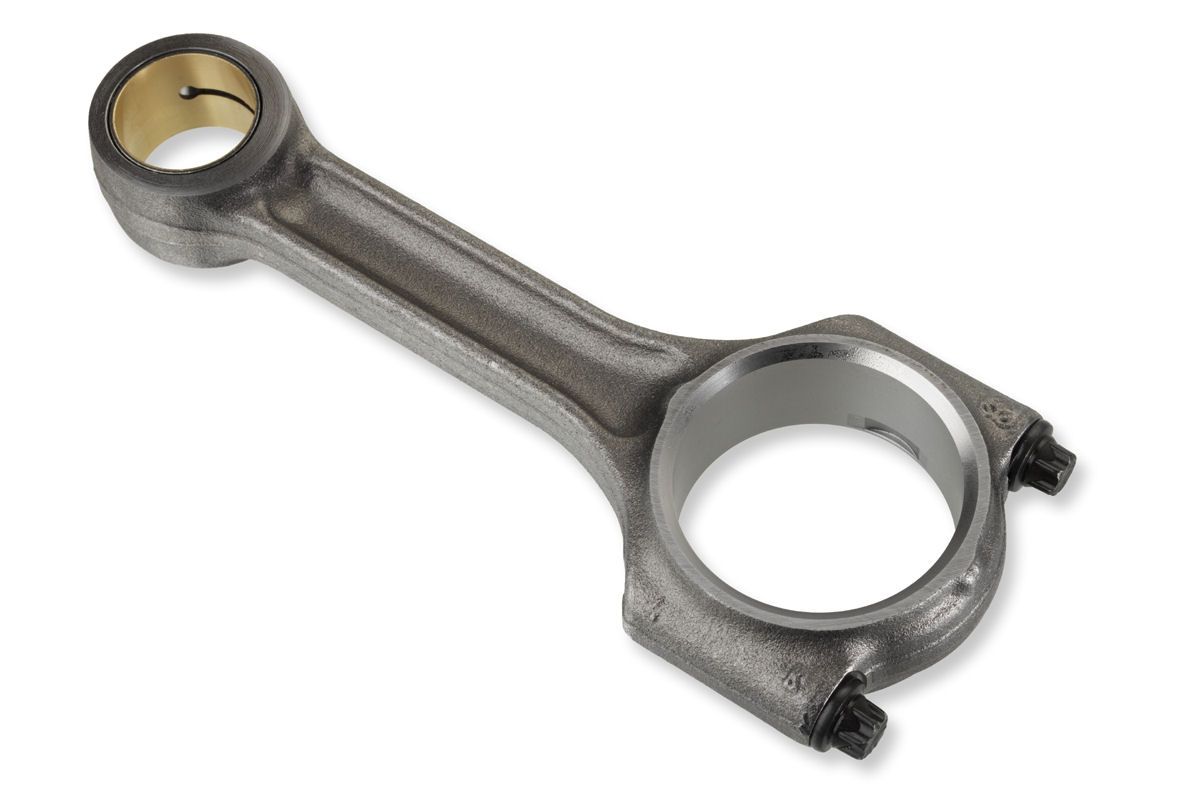
A connecting rod is one of the most important components inside a reciprocating engine. Although it may appear to be a simple metal link, its job is critical: it connects the piston to the crankshaft and transfers the force created by combustion into rotational motion. The design, material, weight, strength, and condition of a connecting rod can have a significant impact on engine performance, efficiency, durability, and reliability.
Understanding how a connecting rod affects an engine can help explain why high-performance engines use specially designed rods and why a damaged connecting rod can lead to catastrophic engine failure.
Contents
- 1. What Is a Connecting Rod?
- 2. How Does a Connecting Rod Affect Engine Performance?
- 3. 1. Strength and Power Handling
- 4. 2. Connecting Rod Weight and Engine Speed
- 5. 3. Effect on Engine RPM
- 6. 4. Connecting Rod Length and Engine Characteristics
- 7. 5. Effect on Friction and Efficiency
- 8. 6. Vibration and Engine Smoothness
- 9. 7. Durability and Engine Reliability
- 10. Common Connecting Rod Materials
- 11. What Happens When a Connecting Rod Fails?
- 12. Why Connecting Rod Design Matters in Performance Engines
- 13. Conclusion
What Is a Connecting Rod?
A connecting rod, often called a con rod, is the component that links the piston with the crankshaft. In a typical four-stroke engine, the piston moves up and down inside the cylinder, while the crankshaft rotates.
The connecting rod converts the piston’s reciprocating movement into the rotational movement of the crankshaft. It also transfers combustion forces from the piston to the crankshaft during the power stroke.
A connecting rod generally consists of three main areas:
- Small end: Connects to the piston through the wrist pin or piston pin.
- Rod beam: The central section that provides strength while keeping weight under control.
- Big end: Connects to the crankshaft’s connecting rod journal and usually contains bearings.
How Does a Connecting Rod Affect Engine Performance?
The connecting rod influences several aspects of engine operation. Its strength and geometry determine how effectively the engine can handle combustion forces and high rotational speeds.
A properly designed connecting rod allows an engine to operate smoothly and reliably. An unsuitable or damaged rod, on the other hand, can reduce performance and potentially cause severe mechanical damage.
1. Strength and Power Handling
During combustion, extremely high pressure is generated inside the cylinder. This pressure pushes the piston downward, transferring a substantial load to the connecting rod.
The rod must withstand both compression and tension without bending or breaking. In a high-performance engine, these forces can become particularly intense because of higher cylinder pressures and engine speeds.
A stronger connecting rod allows an engine to safely handle greater power and torque. This is one reason performance and racing engines often use forged steel or other high-strength connecting rods.
2. Connecting Rod Weight and Engine Speed
The weight of the connecting rod has a direct relationship with engine performance. A heavier rod increases the reciprocating and rotating mass inside the engine.
As engine speed increases, the forces created by this moving mass also increase. Therefore, reducing connecting rod weight can help an engine rev more freely and reduce mechanical stress.
However, weight reduction must not compromise strength. A lightweight connecting rod that cannot withstand the engine’s operating loads may fail under demanding conditions.
Engine manufacturers therefore try to achieve a balance between low weight, high strength, durability, and manufacturing cost.
3. Effect on Engine RPM
Connecting rod design can influence how safely an engine operates at high RPM. At high rotational speeds, the rod experiences rapidly changing tensile and compressive forces.
A strong and lightweight connecting rod can tolerate these forces more effectively. This is particularly important in sports cars, motorcycles, racing engines, and other applications where high engine speeds are common.
Poor-quality or excessively heavy rods can increase stress and limit the engine’s safe operating range.
4. Connecting Rod Length and Engine Characteristics
The length of the connecting rod also affects engine behavior. It influences the relationship between the piston’s movement and crankshaft rotation.
A different rod-to-stroke ratio can affect piston dwell time around the top and bottom of the cylinder. This can influence combustion characteristics, piston acceleration, friction, and overall engine behavior.
Changing connecting rod length is therefore not simply a matter of installing a longer or shorter component. It needs to be considered alongside piston design, crankshaft dimensions, cylinder geometry, and compression ratio.
5. Effect on Friction and Efficiency
Connecting rod movement contributes to friction inside the engine. The rod and its bearings must move smoothly while supporting substantial loads.
Good-quality bearings, correct clearances, proper lubrication, and accurate machining are essential for minimizing friction.
If the connecting rod or its bearings are improperly designed or worn, friction can increase. This can consume some of the engine’s available power and increase heat generation.
Consequently, an efficient connecting rod assembly can contribute to better mechanical efficiency and smoother engine operation.
6. Vibration and Engine Smoothness
The connecting rod is part of the engine’s reciprocating assembly. Its weight and geometry influence the forces and vibrations produced as the engine operates.
If components are improperly balanced, the engine may experience increased vibration. Excessive vibration can reduce comfort and place additional stress on bearings, the crankshaft, pistons, and other components.
Precision manufacturing and balancing are therefore especially important in modern and high-performance engines.
7. Durability and Engine Reliability
A connecting rod must survive millions of cycles during its service life. Even a small defect can eventually become a serious problem because the component is continuously exposed to high loads.
Fatigue strength is particularly important. A rod may not fail because of one enormous load; instead, repeated loading and unloading can gradually create cracks.
A reliable connecting rod therefore needs appropriate material selection, heat treatment, machining, and quality control.
Common Connecting Rod Materials
Connecting rods are manufactured from different materials depending on the application.
Forged steel is widely used because it provides excellent strength and durability. It is common in both conventional and performance engines.
Aluminum can be used when low weight is particularly important, although its characteristics differ from steel and it may be more common in specialized applications.
Some advanced performance applications use specialized alloys or other materials to achieve a favorable combination of strength and weight.
What Happens When a Connecting Rod Fails?
Connecting rod failure can be extremely destructive. A bent rod may cause piston movement problems, while a broken rod can damage the crankshaft, cylinder block, piston, and other internal components.
In severe cases, the broken rod can punch through the engine block, resulting in what is commonly called a “thrown rod.”
Warning signs of connecting rod or bearing problems can include unusual knocking noises, low oil pressure, excessive vibration, and abnormal engine performance. However, these symptoms can have several possible causes, so proper mechanical diagnosis is essential.
Why Connecting Rod Design Matters in Performance Engines
Performance engines generally produce higher cylinder pressures and operate at higher RPMs than ordinary engines. This places additional demands on the connecting rods.
Performance connecting rods may feature stronger materials, improved forging processes, optimized beam designs, precision balancing, and high-quality fasteners. These improvements allow the engine to handle greater loads while controlling weight.
The goal is not simply to make the rod stronger. Engineers must optimize strength, weight, stiffness, fatigue resistance, dimensions, and manufacturing accuracy as part of the entire engine system.
Conclusion
The connecting rod plays a crucial role in determining an engine’s performance, reliability, and operating limits. It transfers combustion forces from the piston to the crankshaft while converting reciprocating motion into useful rotational power.
Its strength affects how much power the engine can safely handle, its weight influences high-RPM performance, its length and geometry affect piston motion, and its manufacturing quality contributes to durability and smooth operation.
For everyday engines, a properly engineered connecting rod provides dependable service over many years. For high-performance engines, connecting rod design becomes even more important because increased power and RPM place significantly greater demands on internal components. Ultimately, the connecting rod may be a relatively small component, but its influence on the overall performance and reliability of an engine is substantial.