Buying a used pickup in Houston means finding a vehicle that can handle multiple roles. It may commute on busy freeways during the week, carry tools between job sites, tow a boat toward the Gulf Coast, or haul materials for a weekend project. Shoppers considering custom auto Houston options should begin with a clear picture of how the truck will actually be used before focusing on appearance, lift kits, wheels, or a particular badge. Houston’s heat, heavy rain, flood-prone roadways, long suburban drives, and active construction community make condition and configuration especially important. A truck that looks impressive but cannot fit the family, carry the equipment, or safely manage a loaded trailer can become an expensive compromise.
Start With the Truck’s Real-World Jobs
Write down what the truck needs to do in a normal month. Include daily commuting, passenger needs, cargo, towing, parking limitations, and the roads it will travel. A buyer who only tows a small utility trailer a few times a year may not need the same heavy-duty setup as someone who regularly moves work equipment or a large camper.
- How many people need comfortable seating?
- Will the bed carry lumber, landscaping supplies, tools, or recreational gear?
- Will the truck tow a boat, enclosed trailer, travel trailer, or machinery?
- Will it spend most of its time in city traffic, on highways, at job sites, or on unpaved property?
- Is four-wheel drive a regular need, or simply a nice feature to have?
Ranking those needs by frequency helps prevent overbuying. A larger truck can offer more capacity, but it can also be harder to park in Houston garages and lots, use more fuel, and cost more for tires, brakes, and repairs.
Choose the Right Truck Size
Compact and Midsize Pickups
Compact and midsize trucks can be easier to maneuver through neighborhoods, job-site parking, and crowded retail areas. They can work well for light hauling, home improvement projects, outdoor equipment, and smaller trailers. Their limits matter, though, particularly when bed space, payload, or frequent heavy towing is part of the plan.
Full-Size Pickups
Full-size pickups provide a broad middle ground for Houston buyers who need passenger room, bed utility, and stronger towing capability. Crew-cab models suit families and work crews, while regular-cab and extended-cab configurations may provide more bed length. When comparing sizes and configurations, independent research on pickup trucks can help shoppers weigh capability, ride comfort, reliability, and ownership considerations.
Heavy-Duty Pickups
Heavy-duty trucks make sense when demanding towing or hauling is routine, not occasional. Their added capacity can come with a firmer unloaded ride, a larger footprint, and higher operating costs. Buy for the loads that occur regularly, leaving a reasonable safety margin, rather than for one rare task that could be handled another way.
Understand Towing and Payload
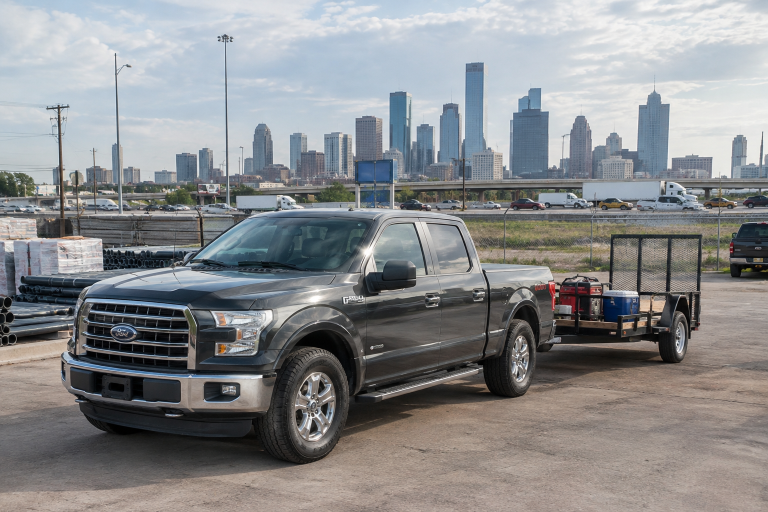
Towing capacity is the amount a truck can pull, while payload is the weight the truck itself carries. Payload includes passengers, tools, bed cargo, accessories, hitch equipment, and trailer tongue weight. A trailer may be within the truck’s tow rating but still push the truck over its payload limit once people and gear are added.
- Use the trailer’s loaded weight, not only its advertised empty weight.
- Read the payload information on the driver-door certification label.
- Confirm ratings for the exact engine, cab, bed, drivetrain, axle ratio, and equipment package.
- Look for useful tow equipment, including trailer wiring, appropriate mirrors, a hitch receiver, and a brake controller where needed.
- Do not assume aftermarket parts increase the manufacturer’s original ratings.
Match the Powertrain, Cab, and Bed to Daily Life
A gas engine is often a practical choice for commuting and light-to-moderate towing. Diesel trucks can appeal to drivers who often tow heavy loads or travel long distances under load, but their purchase price, maintenance needs, and emissions systems warrant close attention. Hybrid and electric trucks may offer quiet operation and strong low-speed torque, but buyers should consider charging access and how towing can affect driving range.
Cab and bed choices are just as important. A regular cab prioritizes work utility, an extended cab adds storage or occasional rear seating, and a crew cab is better for passengers. Short beds are easier to maneuver, while long beds are more useful for equipment and materials. Measure the garage, driveway, parking area, and common cargo before deciding.
Inspect the Used Truck Thoroughly
A clean exterior does not prove that a truck is mechanically sound. Inspect it in daylight and arrange a pre-purchase inspection with an independent mechanic whenever possible. Houston-area buyers should pay special attention to underbody condition and any evidence of water intrusion after major storms.
- Check panel gaps, paint consistency, bed-floor damage, tailgate operation, hitch condition, and trailer wiring.
- Look underneath for corrosion, damaged crossmembers, fluid leaks, bent suspension parts, and signs of recent repairs.
- Test the engine, transmission, steering, brakes, air conditioning, cameras, windows, sensors, and infotainment system.
- Listen for drivetrain or suspension noises during a complete test drive.
- Check tire wear and age, because uneven wear can point to alignment, steering, or suspension problems.
- Test four-wheel drive, if equipped, according to the owner’s manual and on a suitable surface.
Review History, Mileage, and Title Information
Service records can reveal more than the odometer alone. Compare mileage on the dashboard with maintenance invoices, inspection records, and title documents. Ask directly whether the truck was used for commercial work, towing, fleet service, off-road driving, or plowing. Before signing paperwork, use the VIN to review title information and watch for brands such as salvage, rebuilt, or flood, as well as odometer discrepancies. Given how often Harris County and the greater Houston area face flooding, a flood brand or an unexplained interior odor, silt, or rust in the cabin deserves extra scrutiny. The Texas DMV’s guidance for checking a vehicle title also advises buyers to have a trusted mechanic inspect a used vehicle before money changes hands.
Compare the Full Cost of Ownership
The monthly payment is only part of the expense. A lower-priced truck may need immediate tires, brakes, suspension work, major scheduled maintenance, or repairs that change the value of the deal. Build a budget that includes fuel or charging, insurance, taxes, registration, financing interest, maintenance, replacement tires, and a reserve for unexpected repairs. Houston drivers should also plan for stop-and-go traffic on congested freeways, summer heat that puts extra strain on batteries and cooling systems, and Texas inspection and registration requirements.
Common Mistakes to Avoid
- Buying the largest truck without a regular need for its capacity.
- Using a maximum towing claim without verifying the exact configuration.
- Ignoring payload once trailer tongue weight and passengers are included.
- Focusing on mileage while overlooking service history and underbody condition.
- Skipping an independent inspection because the truck looks clean.
- Choosing a cab or bed length without considering passengers, cargo, and parking.
- Shopping only by monthly payment instead of total ownership cost.
Final Pre-Purchase Checklist
- Define the truck’s most frequent jobs.
- Estimate loaded cargo and trailer weights.
- Verify payload and towing ratings for that exact truck.
- Inspect the interior, bed, frame, mechanical systems, and tires.
- Review the VIN, service records, title history, and recalls.
- Take a complete test drive and request an independent inspection.
- Compare the full ownership budget before making an offer.
The right used pickup for Houston, Texas, is one that fits the workday, the weekend, and the local driving environment without forcing unnecessary costs or compromises. Careful research, accurate weight planning, a thorough inspection, and a realistic budget can turn a used truck purchase into a dependable long-term investment.
Conclusion
Choosing the right used pickup in Houston starts with understanding your everyday needs rather than focusing solely on size, appearance, or advertised capabilities. Consider how often you will carry passengers, haul equipment, tow a trailer, or navigate busy city streets before deciding on the truck’s size, engine, cab, and bed configuration. It is equally important to verify the exact towing and payload ratings, review the vehicle’s history, and inspect for flood damage, rust, mechanical wear, and signs of heavy use. Beyond the purchase price, account for fuel, insurance, maintenance, tires, and potential repairs to understand the full cost of ownership. Taking time to arrange an independent inspection and compare your options can help you avoid costly surprises. Ultimately, the best pickup is one that handles your regular workload, fits your budget, and provides dependable performance for both daily driving and occasional demanding tasks.